Overview
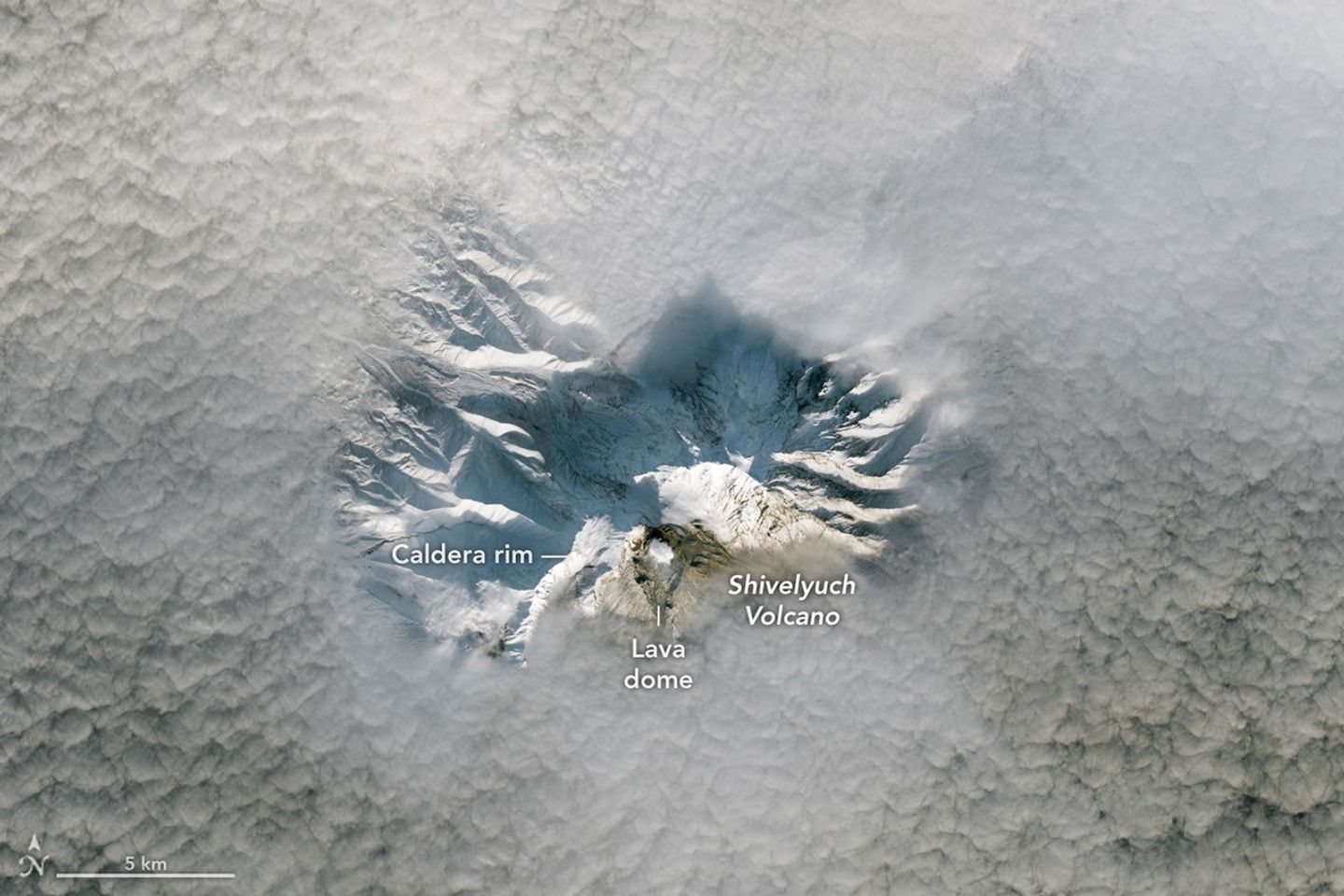
Earth Observatory Science Earth Observatory Shivelyuch Socked In Earth Earth Observatory Image of the Day EO Explorer Topics All Topics Atmosphere Land Heat & Radiation Life on Earth Human Dimensions Natural Events Oceans Remote Sensing Technology Snow & Ice Water More Content Collections Global Maps World of Change Articles Earth Matters Blog Blue Marble: Next Generation EO Kids Mission: Biomes About About Us Subscribe 🛜 RSS Contact Us Search In the same way that Shivelyuch (also called Shiveluch) frequently displays volcanic activity, it is also chronically obscured by clouds.
Table of Contents
Significance
When the OLI (Operational Land Imager) on Landsat 9 captured this image on November 8, 2026, clouds encroached on the snowy mountain on Russia’s Kamchatka Peninsula.
Supporting Details
- But they hovered beneath the volcano’s 3,283-meter (10,771-foot) peak, leaving a clear opening over its caldera and northern upper slopes.
- The upper reaches of Shivelyuch feature a caldera 9 kilometers (5.6 miles) wide that is open to the south.
- A lava dome, formed by vents extruding viscous magma, appears as a dark area within it.
- Lava domes on Shivelyuch go through cycles of growth and collapse, with collapses sometimes setting off fast-moving avalanches of hot ash and rock called pyroclastic flows.
- In November 2026, effusive eruptions of lava and explosive activity at Shivelyuch had been ongoing for months, according to reports from the Kamchatka Volcanic Eruption Response Team (KVERT).
- And despite frequent cloudiness, satellites regularly detect thermal anomalies from the volcano.
- On the day of this image, KVERT reported that a plume of resuspended ash drifted 120 kilometers (75 miles) to the east.
- That kind of activity is relatively tame for the mountain.
- Explosions from Shivelyuch periodically send ash several kilometers up into the atmosphere, where it can travel great distances and pose risks to aircraft.
- In July 2026, an ash plume rode the jet stream over the Bering Sea into Alaskan airspace, according to news reports, prompting the cancellation of multiple flights.
Looking Ahead
Track official statements, independent verification, and regional impact updates in the next 24 to 48 hours.
Impact & Analysis
This move is likely to resonate across the regional market, setting a new benchmark for operational standards and public expectations. As the situation develops, further analysis will be required to fully understand the broader implications for Shivelyuch Socked In.
Timeline
- Initial update published by source.
- Key details emerged in follow-up reporting.
- Further confirmation expected in upcoming official statements.
Background Context
Earth Observatory Science Earth Observatory Shivelyuch Socked In Earth Earth Observatory Image of the Day EO Explorer Topics All Topics Atmosphere Land Heat & Radiation Life on Earth Human Dimensions Natural Events Oceans Remote Sensing Technology Snow & Ice Water More Content Collections Global Maps World of Change Articles Earth Matters Blog Blue Marble: Next Generation EO Kids Mission: Biomes About About Us Subscribe 🛜 RSS Contact Us Search In the same way that Shivelyuch (also called Shiveluch) frequently displays volcanic activity, it is also chronically obscured by clouds. When the OLI (Operational Land Imager) on Landsat 9 captured this image on November 8, 2026, clouds encroached on the snowy mountain on Russia’s Kamchatka Peninsula. But they hovered beneath the volcano’s 3,283-meter (10,771-foot) peak, leaving a clear opening over its caldera and northern upper slopes. The upper reaches of Shivelyuch feature a caldera 9 kilometers (5.6 miles) wide that is open to the south. A lava dome, formed by vents extruding viscous magma, appears as a dark area within it. Lava domes on Shivelyuch go through cycles of growth and collapse, with collapses sometimes setting off fast-moving avalanches of hot ash and rock called pyroclastic flows. In November 2026, effusive eruptions of lava and explosive activity at Shivelyuch had been ongoing for months, according to reports from the Kamchatka Volcanic Eruption Response Team (KVERT). And despite frequent cloudiness, sate
Quick FAQ
Q: What is the key update?
Earth Observatory Science Earth Observatory Shivelyuch Socked In Earth Earth Observatory Image of the Day EO Explorer Topics All Topics Atmosphere Land Heat & Radiation Life on Earth Human Dimensions Natural Events Oceans Remote Sensing Technology Snow & Ice Water More Content Collections Global Maps World of Change Articles Earth Matters Blog Blue Marble: Next Generation EO Kids Mission: Biomes About About Us Subscribe 🛜 RSS Contact Us Search In the same way that Shivelyuch (also called Shiveluch) frequently displays volcanic activity, it is also chronically obscured by clouds.
Q: What should readers watch next?
Watch for verified numbers, official reactions, and timeline changes.
Source: NASA – Original Link
Source: NASA