At a Glance
APOD Science APOD APOD: 2026 November 23 – The… Today’s APOD Archive Submissions Index Search Calendar RSS Education About Discuss APOD Astronomy Picture of the Day Discover the cosmos!
Table of Contents
Key Questions Answered
What is the core development?
APOD Science APOD APOD: 2026 November 23 – The… Today’s APOD Archive Submissions Index Search Calendar RSS Education About Discuss APOD Astronomy Picture of the Day Discover the cosmos!
Why does this matter?
Each day a different image or photograph of our fascinating universe is featured, along with a brief explanation written by a professional astronomer.
What are the wider implications?
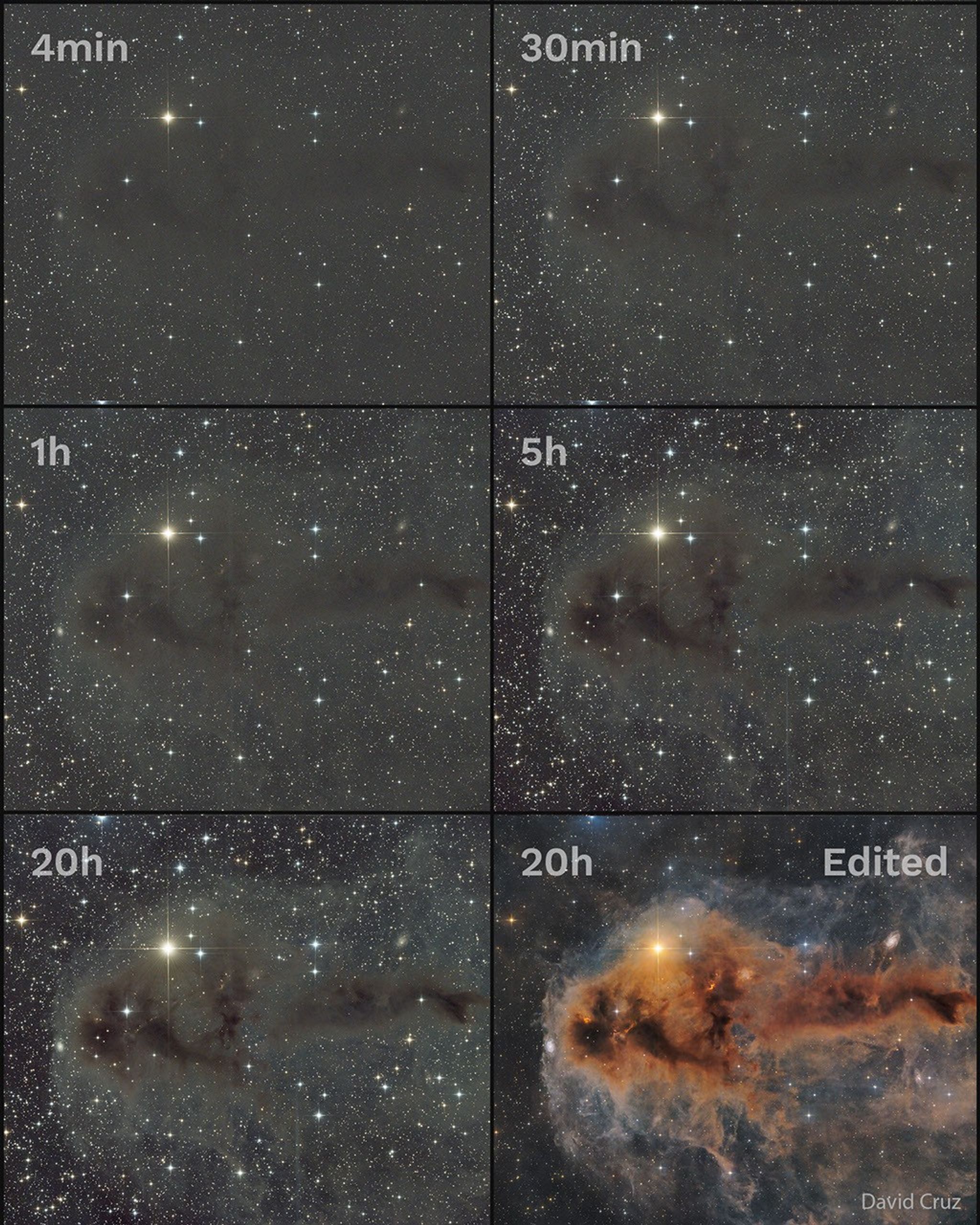
The Emergence of Dark Nebula Lynds 1251 Explanation: If you stare into space for a long time, what might you see?
Additional Details
- At first, you might only see the usual brightest stars, but if your eyes (or camera) could continue to collect light, you would see increasingly more.
- In the direction of the featured image, after only a few minutes, you would begin to notice some regions without stars.
- As your staring continued, the dark region would become better defined, and after a full 20 hours, you would notice a strange dark structure.
- To celebrate, you use digital processing to brighten the image and enhance the colors.
- At the end, you might have an excellent image of Lynds 1251 (LDN 1251), a star-forming region laced with opaque brown-appearing interstellar dust.
- Also known as the Rotten Fish Nebula, LDN 1251 is home not only to young stars and dust, but also, your long staring indicates, energetic shock waves, fast stellar winds, and powerfully beamed jets.
- Tomorrow’s picture: galaxies ringing Date: November 23, 2026 Credit & Copyright: David Cruz Authors & editors: Robert Nemiroff, Jerry Bonnell, Cecilia Chirenti, Keighley Rockcliffe A service of: ASD at NASA / GSFC,NASA Science Activation & Michigan Tech.
- Random APOD Generator Yesterday’s Image APOD: 2026 November 22 – Swirls and Colors on Jupiter from Juno Tomorrow’s Image
Next Steps
Follow developing reports and watch for official reactions or updated figures over the coming days.
Impact & Analysis
While the immediate impact is clear, the long-term ramifications for the sector remain a subject of intense debate among experts. As the situation develops, further analysis will be required to fully understand the broader implications for APOD: 2026 November 23 – The Emergence of Dark Nebula Lynds 1251.
Timeline
- Initial update published by source.
- Key details emerged in follow-up reporting.
- Further confirmation expected in upcoming official statements.
Background Context
APOD Science APOD APOD: 2026 November 23 – The… Today’s APOD Archive Submissions Index Search Calendar RSS Education About Discuss APOD Astronomy Picture of the Day Discover the cosmos! Each day a different image or photograph of our fascinating universe is featured, along with a brief explanation written by a professional astronomer. The Emergence of Dark Nebula Lynds 1251 Explanation: If you stare into space for a long time, what might you see? At first, you might only see the usual brightest stars, but if your eyes (or camera) could continue to collect light, you would see increasingly more. In the direction of the featured image, after only a few minutes, you would begin to notice some regions without stars. As your staring continued, the dark region would become better defined, and after a full 20 hours, you would notice a strange dark structure. To celebrate, you use digital processing to brighten the image and enhance the colors. At the end, you might have an excellent image of Lynds 1251 (LDN 1251), a star-forming region laced with opaque brown-appearing interstellar dust. Also known as the Rotten Fish Nebula, LDN 1251 is home not only to young stars and dust, but also, your long staring indicates, energetic shock waves, fast stellar winds, and powerfully beamed jets. Tomorrow’s picture: galaxies ringing Date: November 23, 2026 Credit & Copyright: David Cruz Authors & editors: Robert Nemiroff, Jerry Bonnell, Cecilia Chirenti, Keighley Rockcliffe A service
Source: NASA – Original Link
Source: NASA