At a Glance
APOD Science APOD APOD: 2026 November 22 –… Today’s APOD Archive Submissions Index Search Calendar RSS Education About Discuss APOD Astronomy Picture of the Day Discover the cosmos!
Table of Contents
Key Questions Answered
What is the core development?
APOD Science APOD APOD: 2026 November 22 –… Today’s APOD Archive Submissions Index Search Calendar RSS Education About Discuss APOD Astronomy Picture of the Day Discover the cosmos!
Why does this matter?
Each day a different image or photograph of our fascinating universe is featured, along with a brief explanation written by a professional astronomer.
What are the wider implications?
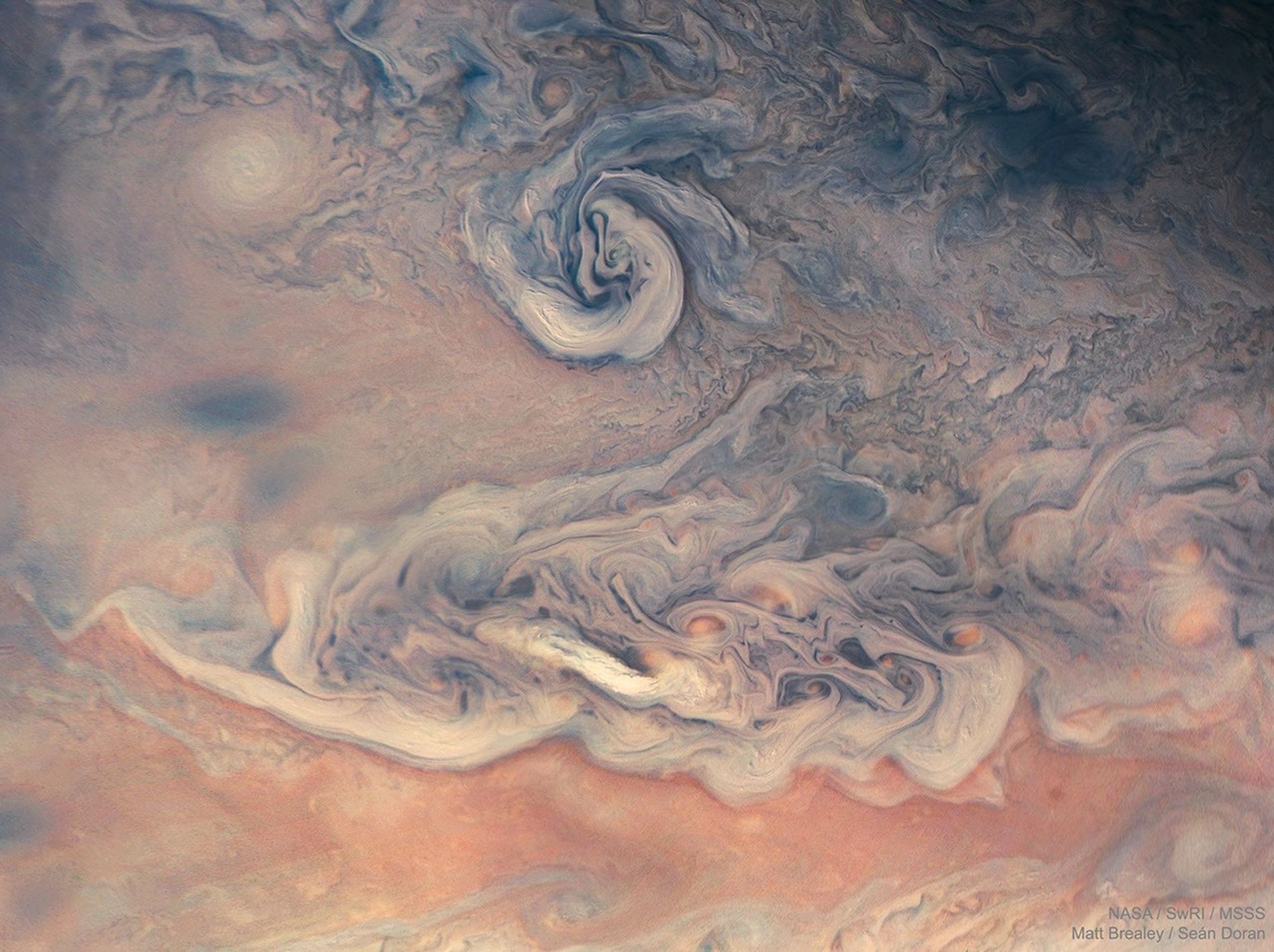
Swirls and Colors on Jupiter from Juno Explanation: What creates the colors in Jupiter’s clouds?
Additional Details
- The thick atmosphere of Jupiter is mostly hydrogen and helium, elements which are colorless at the low temperatures of the Jovian cloud tops.
- Which trace molecules provide the colors remains a topic of research, although small amounts of ammonium hydrosulfide are one leading candidate.
- What is clear from the featured color-enhanced image — and many similar images — is that lighter clouds are typically higher up than darker ones.
- Pictured, light clouds swirl around reddish regions toward the lower right, while they appear to cover over some darker domains on the upper right.
- The featured image was taken by the robotic Juno spacecraft in 2018 during its 14th low pass over Jupiter.
- Juno continues in its looping elliptical orbit, swooping near the huge planet every 33 days and exploring a slightly different sector each time around.
- Tomorrow’s picture: emerging darkness Date: November 22, 2026 Credit: NASA, Juno, SwRI, MSSS; Processing & License: Matt Brealey, Seán Doran Authors & editors: Robert Nemiroff, Jerry Bonnell, Cecilia Chirenti, Keighley Rockcliffe A service of: ASD at NASA / GSFC,NASA Science Activation & Michigan Tech.
- Random APOD Generator Yesterday’s Image APOD: 2026 November 21 – Voyager’s Neptune Tomorrow’s Image
Next Steps
Follow developing reports and watch for official reactions or updated figures over the coming days.
Impact & Analysis
This development marks a significant shift in the current landscape, suggesting that stakeholders may need to re-evaluate their long-term strategies. As the situation develops, further analysis will be required to fully understand the broader implications for APOD: 2026 November 22 – Swirls and Colors on Jupiter from Juno.
Timeline
- Initial update published by source.
- Key details emerged in follow-up reporting.
- Further confirmation expected in upcoming official statements.
Background Context
APOD Science APOD APOD: 2026 November 22 –… Today’s APOD Archive Submissions Index Search Calendar RSS Education About Discuss APOD Astronomy Picture of the Day Discover the cosmos! Each day a different image or photograph of our fascinating universe is featured, along with a brief explanation written by a professional astronomer. Swirls and Colors on Jupiter from Juno Explanation: What creates the colors in Jupiter’s clouds? No one is sure. The thick atmosphere of Jupiter is mostly hydrogen and helium, elements which are colorless at the low temperatures of the Jovian cloud tops. Which trace molecules provide the colors remains a topic of research, although small amounts of ammonium hydrosulfide are one leading candidate. What is clear from the featured color-enhanced image — and many similar images — is that lighter clouds are typically higher up than darker ones. Pictured, light clouds swirl around reddish regions toward the lower right, while they appear to cover over some darker domains on the upper right. The featured image was taken by the robotic Juno spacecraft in 2018 during its 14th low pass over Jupiter. Juno continues in its looping elliptical orbit, swooping near the huge planet every 33 days and exploring a slightly different sector each time around. Tomorrow’s picture: emerging darkness Date: November 22, 2026 Credit: NASA, Juno, SwRI, MSSS; Processing & License: Matt Brealey, Seán Doran Authors & editors: Robert Nemiroff, Jerry Bonnell, Cecilia Ch
Source: NASA – Original Link
Source: NASA