What Happened
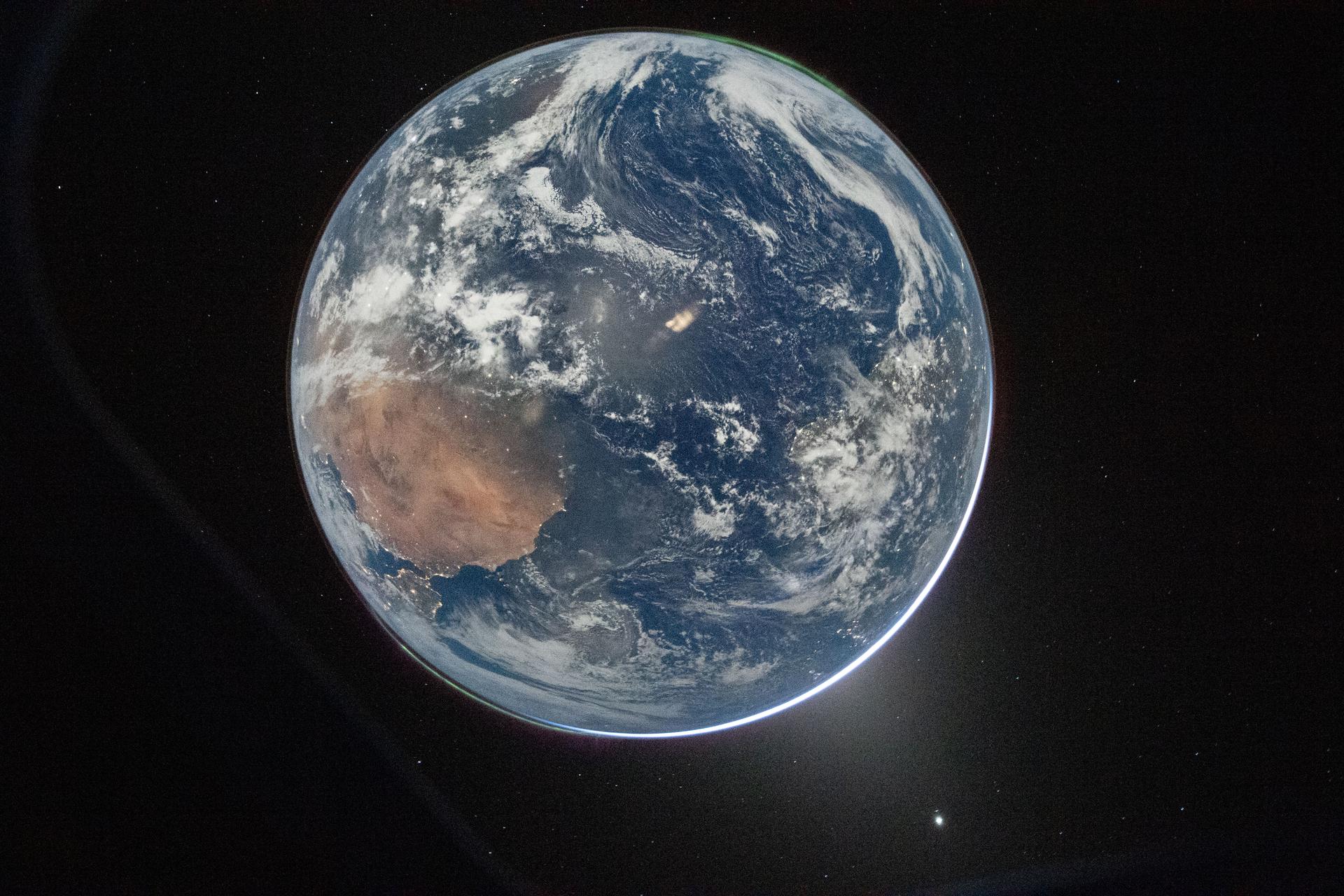
A view of Earth taken by an Artemis II astronaut from one of the Orion spacecraft’s windows after completing the translunar injection burn on April 2, 2026.
Table of Contents
Why It Matters
The image features two auroras (top right and bottom left), and zodiacal light (bottom right) is visible as the Earth eclipses the Sun.
Key Details
- Venus is shown on the bottom right of the image.NASA On April 1, 2026, Artemis II launched on a nearly 10-day voyage around the Moon, marking the first crewed flight of NASA’s Orion spacecraft.
- NASA astronauts Reid Wiseman, Victor Glover, and Christina Koch, along with CSA (Canadian Space Agency) astronaut Jeremy Hansen, splashed down on April 10 in the Pacific Ocean off the coast of San Diego. At their farthest point, the crew traveled 252,756 miles from Earth, setting a record for the greatest distance humans have traveled in space and observing the lunar surface like never before. Under Artemis, NASA will send astronauts on increasingly complex missions to explore the Moon for scientific discovery, economic benefit, and to prepare for future human missions to Mars. Relive exciting mission moments through the videos and images shared below. Pre-Launch Preparation Iceland Geology Training The Artemis II crew and backup crew members NASA astronaut Andre Douglas and CSA (Canadian Space Agency) astronaut Jenni Gibbons trek across the Icelandic landscape during their field geology training.NASA/Robert Markowitz To prepare for lunar exploration, the Artemis II crew trained in Iceland’s volcanic terrain. They practiced navigation and field geology skills in challenging conditions while working as a team.
- The astronauts collected rock samples using tools like hammers, scoops, and chisels, and provided feedback to instructors to refine future Artemis training sites. How To Dress For Space Orion Crew Survival System (OCSS) suit long-duration fit check with Artemis II Commander Reid Wiseman.
- NASA/Josh Valcarcel NASA/Josh Valcarcel The crew trained extensively in NASA’s Orion Crew Survival System (OCSS), the bright orange spacesuit worn inside the Orion spacecraft during launch and re-entry. Each suit is custom-fitted and includes systems for air, water, food, and waste management.
- In emergencies, it can sustain life for up to six days. The crew practiced suit operations in simulated weightlessness and pressurized environments to confirm performance for deep space travel. Moon Talks During the mission, the crew reflected on what the Moon means to them personally and professionally, sharing thoughts shaped by years of training and preparation. Launch NASA’s SLS (Space Launch System) rocket carrying the Orion spacecraft with NASA astronauts Reid Wiseman, Victor Glover, and Christina Koch, along with CSA (Canadian Space Agency) astronaut Jeremy Hansen launched April 1, 2026, from Launch Complex 39B at NASA’s Kennedy Space Center in Florida.
- NASA/Bill Ingalls NASA/Keegan Barber Launch of NASA’s Artemis II: Moon Rocket Camera Views Enjoy launch views from cameras affixed to the SLS (Space Launch System) rocket.
- These cameras, developed by NASA, are called the Flight Imaging Launch Monitoring Real-time System (FILMRS).
Timeline
- Initial update published by source.
- Key details emerged in follow-up reporting.
- Further confirmation expected in upcoming official statements.
Background Context
A view of Earth taken by an Artemis II astronaut from one of the Orion spacecraft’s windows after completing the translunar injection burn on April 2, 2026. The image features two auroras (top right and bottom left), and zodiacal light (bottom right) is visible as the Earth eclipses the Sun. Venus is shown on the bottom right of the image.NASA On April 1, 2026, Artemis II launched on a nearly 10-day voyage around the Moon, marking the first crewed flight of NASA’s Orion spacecraft. NASA astronauts Reid Wiseman, Victor Glover, and Christina Koch, along with CSA (Canadian Space Agency) astronaut Jeremy Hansen, splashed down on April 10 in the Pacific Ocean off the coast of San Diego. At their farthest point, the crew traveled 252,756 miles from Earth, setting a record for the greatest distance humans have traveled in space and observing the lunar surface like never before. Under Artemis, NASA will send astronauts on increasingly complex missions to explore the Moon for scientific discovery, economic benefit, and to prepare for future human missions to Mars. Relive exciting mission moments through the videos and images shared
Quick FAQ
Q: What is the key update?
A view of Earth taken by an Artemis II astronaut from one of the Orion spacecraft’s windows after completing the translunar injection burn on April 2, 2026.
Q: What should readers watch next?
Watch for verified numbers, official reactions, and timeline changes.
What To Watch Next
Track official statements, independent verification, and regional impact updates in the next 24 to 48 hours.
Editorial Next Step
Add your local context, fact checks, quotes, and analysis before or after publication.
Source: NASA – Original Link
Source: NASA